Sunday, 5 February 2017

40. Winter in Kostino


Korolyov, Moscow Oblast. Kostino District in winter: buildings of the estate of A. Kraft and the Church of the Nativity of Theotokos.
Dmitry Ivanov. 2015. CC-BY-SA 4.0. The description of the photo →
Korolyov, Moscow Oblast. A corner of Kostino District in winter.
A view from the pond:
• The washhouse of the estate of Alexander Kraft (1874—1935) Kostino (the two-storeyed building on the left).
  Built in the beginning of the 20th century (before 1917).
• The poultry-house of the Kostino Estate (the green building on the right). Built in the beginning of the 20th century (before 1917).
• The Church of Nativity of the Most Holy Theotokos. Built in 2005.

Saturday, 28 January 2017

Walls


Korolyov, Moscow Oblast. A brick wall of a car park.
Dmitry Ivanov. 2016. CC-BY-SA 4.0. The description of the photo →
Korolyov, Moscow Oblast. A brick wall of a muilti-storey car park in Gorkogo Street.

The location of this wall:

Sunday, 22 January 2017

The Building of the Council of Labour and Defense (the Building of the State Duma)


The Building of the Council of Labour and Defense (STO) in Moscow was designed by Arkady Langman (1886—1968) and built in 1935.
After the dissolution of the STO in 1937 the building was used by the Council of People's Commissars (Sovnarkom) and then by its successor — the Council of Ministers of the Soviet Union (Sovmin); later the building was transferred to the State Planning Committee (Gosplan).
Currently (2017) the State Duma of the Russian Federation is located in the building.
The façade of this piece of the early Stalinist architecture combines the logicality of the Constructivism with the monumentality of the Neoclassicism which soon became the main style of the Soviet architecture of the Stalinist period. The design created by Arkady Langman was highly appreciated and for a long time it was considered as the model of governmental buildings.
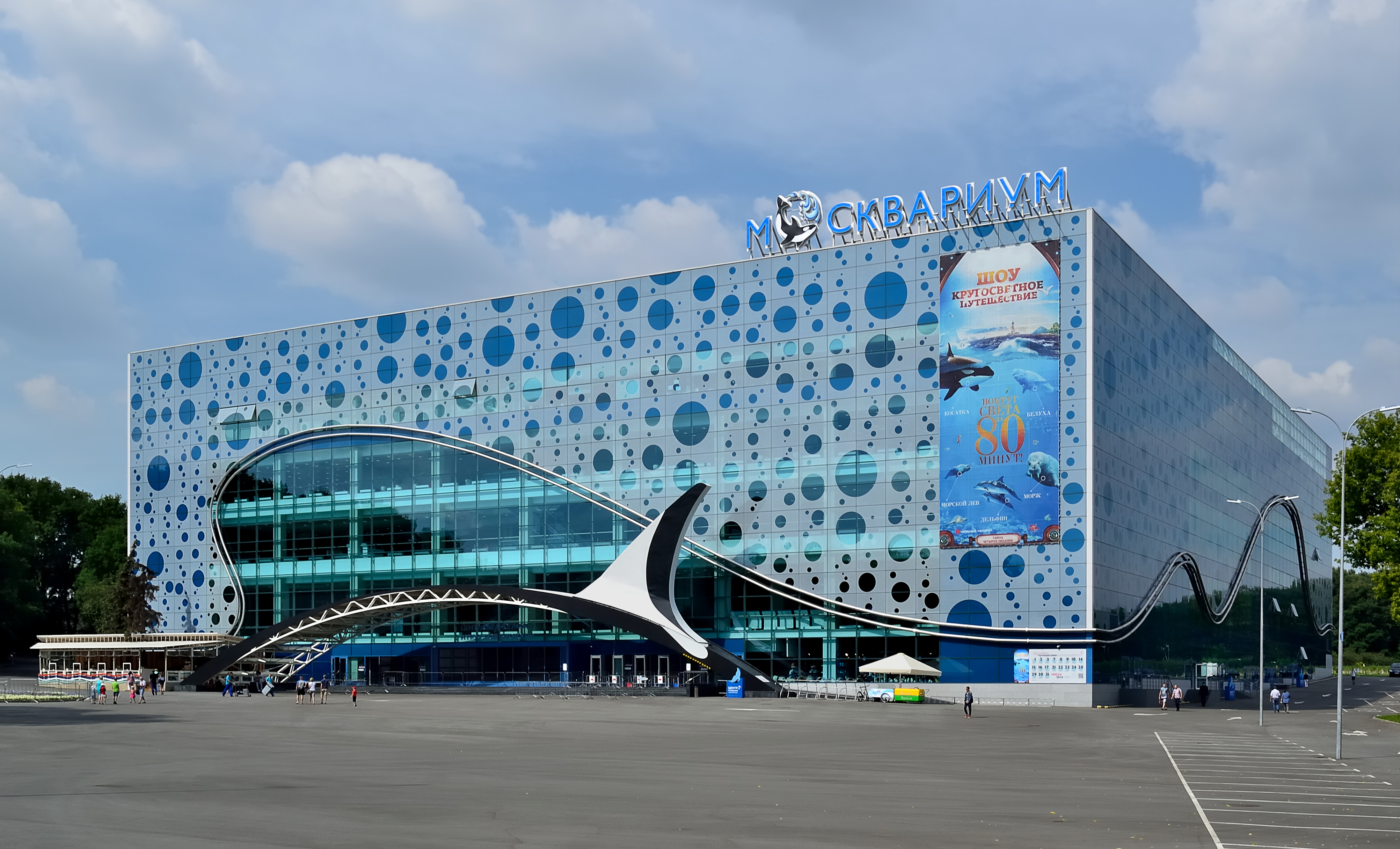
Moscow. VDNKh. The main building of the Centre of Oceanography and Marine Biology Moskvarium.
Dmitry Ivanov. 2016. CC-BY-SA 4.0. The description of the photo →
Moscow. The building of the Council of Labour and Defense (the building of the State Duma). A view from the Manege Square.

The location of the Building of the Council of Labor and Defense:

Address: Russia, г. Москва, ул. Охотный ряд, дом 1.

Sunday, 15 January 2017

Moskvarium


The Centre of Oceanography and Marine Biology Moskvarium (Russian: Москвариум) is a public oceanarium in the VDNKh, Moscow, Russia. The construction of the oceanarium started in 2013, in 2015 the building was finished and opened its doors to visitors.
The total floor space of the Moskvarium is about 53,000 m2 (about 570,490 sq ft), the area of the aquarium zone is about 12,000 m2 (about 129,170 sq ft); currently (2016) it is the largest oceanarium of Europe.
Moscow. VDNKh. The main building of the Centre of Oceanography and Marine Biology Moskvarium.
Dmitry Ivanov. 2016. CC-BY-SA 4.0. The description of the photo →
Moscow. VDNKh. The main building of the Centre of Oceanography and Marine Biology Moskvarium. A general view.

The location of the Moskvarium:

Tuesday, 3 January 2017

The Small Building of the Trinity Church in Korolyov


The parish of the Orthodox Church of the Holy Trinity in Korolyov was founded in 1999 and soon the construction of the “small” church building of wood started. It was finished in 2003; on 4 July 2005 the wooden church was consecrated by Metropolitan Juvenaly.
In the same year the foundation of the new (“large”) church of bricks was laid. The works lasted about 10 years, and were completed in 2015 when the Great Consecration of the new church were carried out. The photos of the “large” building of the Trinity Church you can see here.
Korolyov, Moscow Oblast. The small wooden building of the Trinity Church.
Dmitry Ivanov. 2016. CC-BY-SA 4.0. The description of the photo →
Korolyov, Moscow Oblast. The Church of the Holy Trinity, the small wooden building of the church. A general view.

The location of the Trinity Church in Korolyov:

Address: Russia, Московская обл., г. Королёв, ул. Горького, дом 77.

Saturday, 24 December 2016

Merry Christmas and Happy New Year!


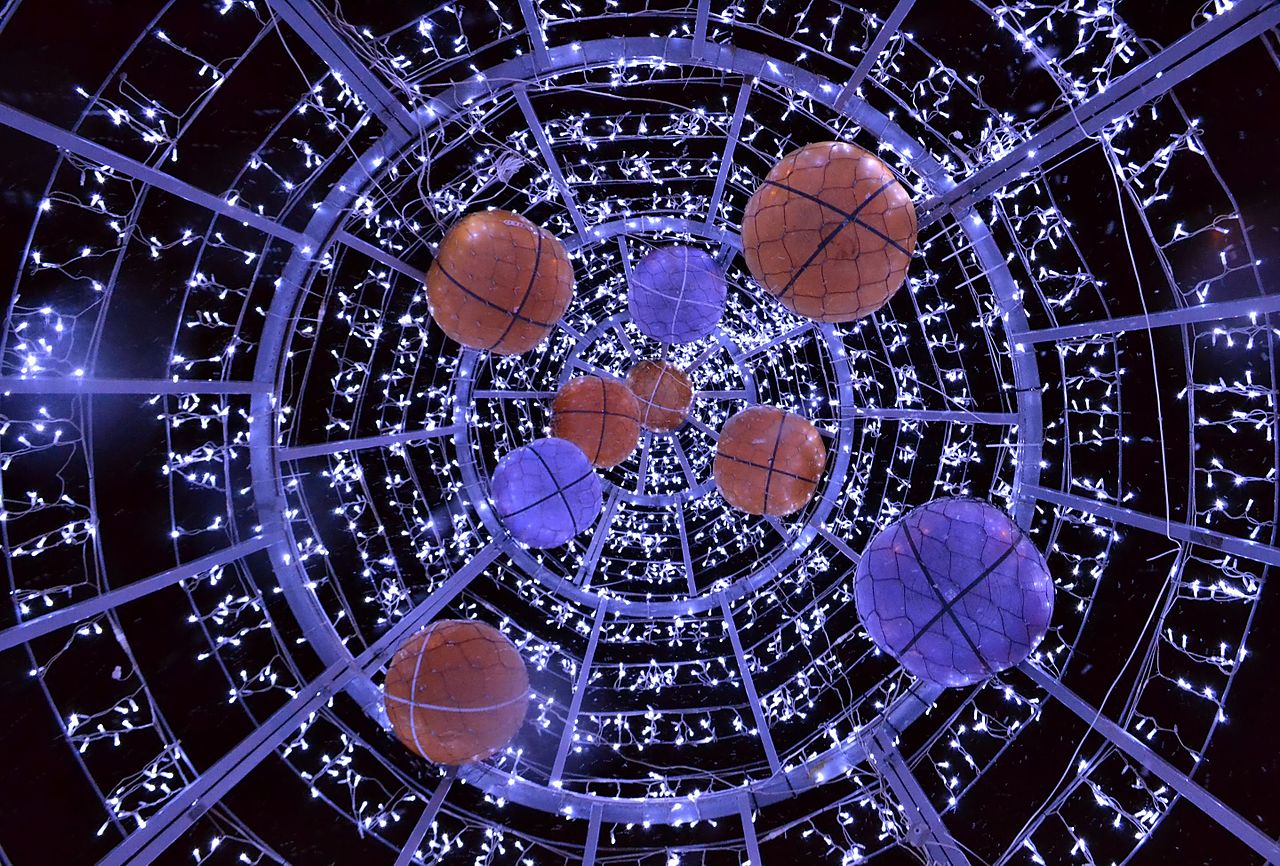
Korolyov, Moscow Oblast. The interior of the illuminated New Year tree.
Dmitry Ivanov. 2015. CC-BY-SA 4.0. The description of the photo →
Korolyov, Moscow Oblast. The interior of the illuminated New Year tree installed on Prospekt Korolyova.

Sunday, 18 December 2016

Buildings of the Eastern Water Supply Canal


The Eastern Water Supply Canal (also known as the Akulovo Water Supply Canal) was built in 1933—1937. It connects the Ucha Reservoir (a reservoir in the system of the Moscow Canal located in northern central part of Moscow Oblast) and the Eastern Water Station in the Eastern Administrative District of Moscow. A section of the canal goes across the city of Korolyov where following photographs were taken.
Korolyov, Moscow Oblast. Valve houses of the Eastern Water Supply Canal (Akulovo Canal)
Dmitry Ivanov. 2015. CC-BY-SA 4.0. The description of the photo →
Korolyov, Moscow Oblast. Valve houses of the Eastern Water Supply Canal (Akulovo Water Supply Canal) located at the crossing of the canal and the railway line between the stations Podlipki-Dachnye and Bolshevo.

Sunday, 4 December 2016

VDNKh. Pavilion No. 38 Fishing


This faced with aluminum and glass piece of the Soviet Brutalism was built in 1985.
Moscow. VDNKh. Pavilion No. 38 Fishing. A general view.
Dmitry Ivanov. 2015. CC-BY-SA 4.0. The description of the photo →
Moscow. VDNKh. Pavilion No. 38 Fishing. A view from the Fourth Kamensky Pond.
The location of the pavilion:

Saturday, 26 November 2016

Boats of Saint Petersburg


Saint Petersburg. A Rinker Captiva sport boat in the Moyka River.
Dmitry Ivanov. 2014. CC-BY-SA 3.0. The description of the photo →
A Rinker sport boat of the Captiva series (the Rinker Boat Company, the USA) on the Moyka River in Saint Petrsburg.

Sunday, 13 November 2016

Towers of the Moscow Kremlin. A view from the Bolshoy Moskvoretsky Bridge.


Let’s ascend the Bolshoy Moskvoretsky Bridge and have a look on the Kremlin.
The Moscow Kremlin. Towers of the south wall: the Taynitskaya Tower, the First Unnamed and the Second Unnamed towers.
Dmitry Ivanov. 2016. CC-BY-SA 4.0. The description of the photo →
On the left we see three towers of the south wall (from left to right):
  • the Taynitskaya Tower (the Secret Tower) – it was built in 1485 and became the first tower of the current Kremlin; in 1770–1771 the tower was dismantled but in 1783 it was built again;
  • the First Unnamed Tower, it was built in 1480s, dismantled in 1770s and built again in 1780s; in 1812 the tower was blown up by the French, in 1835 it was restored;
  • the Second Unnamed Tower, it was built in 1480s, dismantled in 1770s and built again in 1780s.
The building of the Grand Kremlin Palace is seen behind the towers.

Saturday, 5 November 2016

Portriat of Nikolay Gnedich by Anton Ivanov


Portrait of Nikolay Gnedich by Anton Ivanov.
Dmitry Ivanov. 2015. CC-BY-SA 4.0. The description of the photo →
Portrait of Nikolay Gnedich by Anton Ivanov. 1835. Marble.
The medaillon on the tombstone of Nikolay Gnedich in the Tikhvin Cenetry, Saint Petersburg: the marble replica created in 1961. The marble original of the medaillon (1835) is kept in the Annunciation Church of the Alexander Nevsky Lavra.
Primarily the sculptural portrait of N. Gnedich was attributed to the Samuil Ivanovich Galberg (1787—1839). Later Elena Karpova, the curator of the sculpture collection of the State Russian Museum, advanced another version: the bas-relief was created by Anton Andreevich Ivanov (?—1852), a pupil of Samuil Galber. This version is based on a report in Khudozhestvennaya Gazeta (Artistic Newspaper, 1841), where the portrait of N. Gnedich is mentioned among works by A. A. Ivanov and on the list of works by A. A. Ivanov in The Lexicon of Russian Artist by Nikolay Sobko.

Monday, 17 October 2016

The Church of Saint Basil the Great in the VDNKh


Moscow. VDNKh. The Church of Saint Basil the Great.
Dmitry Ivanov. 2015. CC-BY-SA 4.0. The description of the photo →
Moscow. VDNKh. The Church of Saint Basil the Great (Russian: храм Святителя Василия Великого). Architect: Andrey Obolensky.
The building was was under consuction in 2000—2001; in 2001 it was consecrated as a chapel by Patriarch Alexy II.
In 2011 the sanctuary was attached to the chapel and Bishop Tikhon (Shevkunov) consecrated it as a church.

The location of the Saint Basil the Great Church:

Saturday, 1 October 2016

VDNKh. Pavilion No. 8 Young Naturalists


Moscow, VDNKh. Pavilion No. 8 Young Naturalists. A general view.
Dmitry Ivanov. 2015. CC-BY-SA 3.0. The description of the photo →
Moscow. VDNKh. Pavilion No. 8 Young Naturalists. Built in 1954.
Currently (2016) the pavilion is used by the museum theater The House of Fairy Tales Once Upon a Times.

Sunday, 18 September 2016

The Bell Tower of St. John's Church at the Pine Forest in Moscow


Moscow. The bell tower of the Church of the Beheading of John the Baptist.
Dmitry Ivanov. 2015. CC-BY-SA 4.0. The description of the photo →
Moscow. The bell tower of the Church of the Beheading of John the Baptist at the Pine Forest (Russian: Храм Усекновения Главы Иоанна Предтечи под Бором). The end of the 18th century.
A view from Pyatnitskaya Street.
A notable feature of this bell tower, built in traditions of the early Classicism with some elements of the Baroque, is different stylistics of its levels. Columns of the lover level (they are not seen on this photograph) are in the Doric style, the medium level is built according to the Ionic order, the columns of the upper level are the most spectacular, they have Corinthian capitals.

The location of the bell tower of the Church of the Beheading of John the Baptist:

Tuesday, 30 August 2016

Grocery Stores of the VDNKh


Moscow, VDNKh. The Grocery Store, the former pavilion of Glavkonserv.
Dmitry Ivanov. 2016. CC-BY-SA 4.0. The description of the photo →
Moscow. VDNKh. The Grocery Store.
The buiding was constructed in 1954 as the trade pavilion of the Glavkonserv (the Main Directorate of the Packing Industry), in 1958—1959 it was used as the exhibition hall Preserved Food, in 1959 it was restructured for a grocery store.

The location of the building depicted on the photograph:

Saturday, 20 August 2016

Fire Engines: PMG-1


The PMG-1 (Russian: ПМГ-1) fire engine based on the GAZ-AA truck was the most widespread Soviet fire truck of 1930s.
Currently the most of the PMG-1 trucks are lost; this museum specimen is kept at a fire station in Balashikha, Moscow Oblast, Russia

A PMG-1 fire engine bazed on a GAZ-AA truck.
Dmitry Ivanov. 2015. CC-BY-SA 3.0. The description of the photo →
A Soviet PMG-1 fire engine.

Saturday, 13 August 2016

The Sentry


Moscow. A sentry at the Tomb of the Unknown Soldier.
Dmitry Ivanov. 2014. CC-BY-SA 3.0. The description of the photo →
A private of the Kremlin Regiment at the Tomb of the Unknown Soldier in the Alexander Garden, Moscow, Russia.

The location of the post depicted on the photograph:

Saturday, 6 August 2016

Saint George attributed to Vasili Yermolin


From the collection of the Tretyakov Gallery


Moscow. The Tretyakov Gallery. Saint Geoge attributed to Vasili Yermolin.
Dmitry Ivanov. 2014. CC-BY-SA 3.0. The description of the photo →
Saint George. A fragment of the destroyed sculpture. 1464 (?). Coloured stone. The Tretyakov Gallery, Moscow, Russia.
The statue was a decoration of the Frolovskaya Strelnitsa (barbican) of the Moscow Kremlin and, later, of the Spasskaya Tower (initially the Frolovskaya Tower) built in 1491 at the site of the demolished barbican.
It was believed that the statue was sculpted by Vasily Yermolin, who was known as a merchant and contractor. Now reseachers call this attribution in question: Yermolin was the purchaser, but not the author of the sculpture. Most probably, the statue was created by masters from Italy.

Saturday, 23 July 2016

The Rostokino Aqueduct


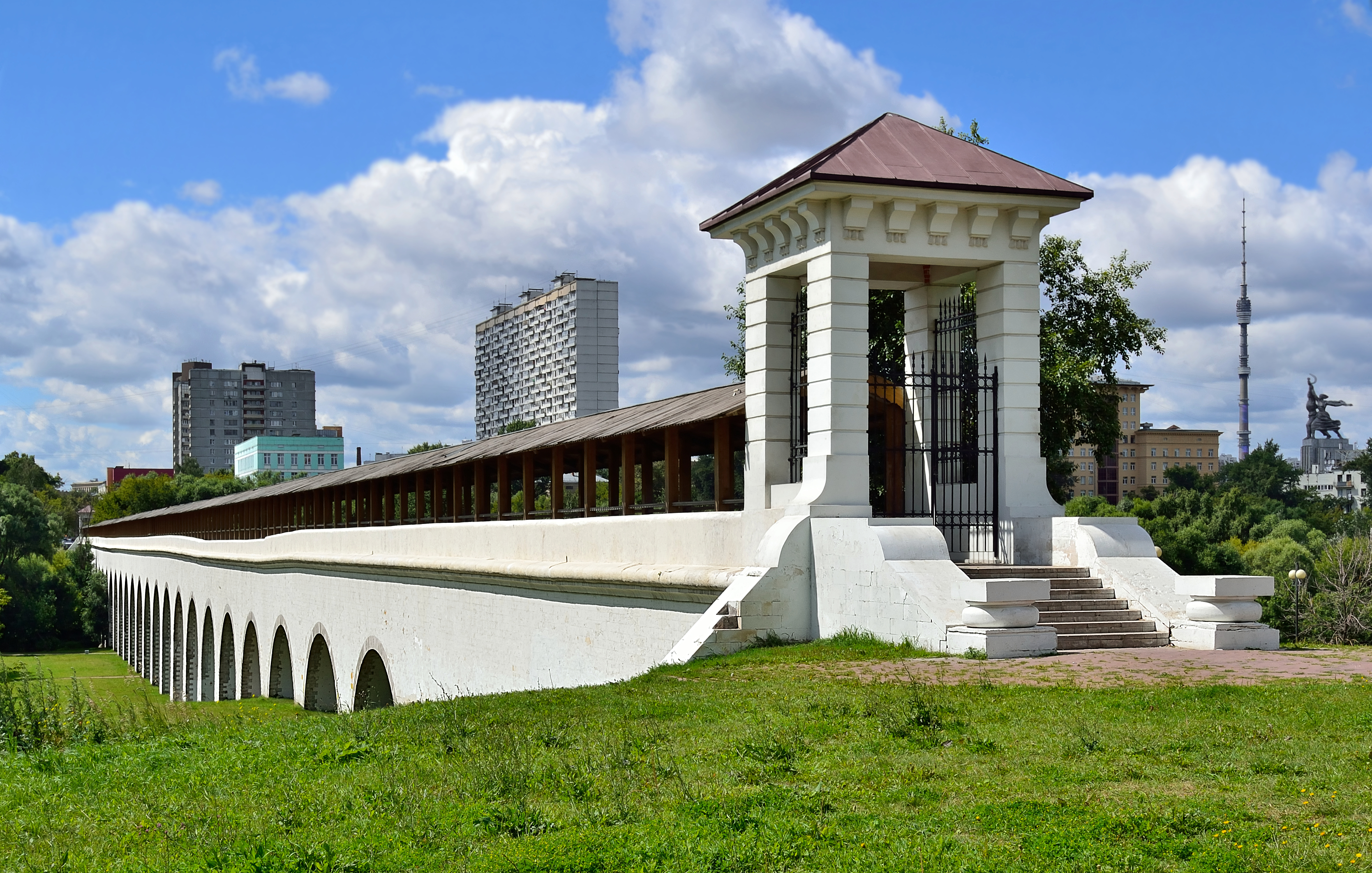
The Rostokino Aqueduct is a stone aqueduct over Yauza River situated in Moscow, Rostokino District.
The construction of the aqueduct started in 1780 and dragged for 25 years, until 1804. More than 1 million rubles were spent on building work therefore the aqueduct has the second, unofficial, name the Million Bridge.
The aqueduct was used as an engineering structure until 1990s. In 2004–2007 it was reconstructed as a pedestrian bridge.
Moscow. The Rostokino Aqueduct. The northern entrance to the aqueduct Dmitry Ivanov. 2015. CC-BY-SA 4.0. The description of the photo →
Moscow. The Rostokino Aqueduct. The northern entrance to the aqueduct.