Showing posts with label Moscow. Show all posts

Sunday, 22 January 2017

The Building of the Council of Labour and Defense (the Building of the State Duma)


The Building of the Council of Labour and Defense (STO) in Moscow was designed by Arkady Langman (1886—1968) and built in 1935.
After the dissolution of the STO in 1937 the building was used by the Council of People's Commissars (Sovnarkom) and then by its successor — the Council of Ministers of the Soviet Union (Sovmin); later the building was transferred to the State Planning Committee (Gosplan).
Currently (2017) the State Duma of the Russian Federation is located in the building.
The façade of this piece of the early Stalinist architecture combines the logicality of the Constructivism with the monumentality of the Neoclassicism which soon became the main style of the Soviet architecture of the Stalinist period. The design created by Arkady Langman was highly appreciated and for a long time it was considered as the model of governmental buildings.
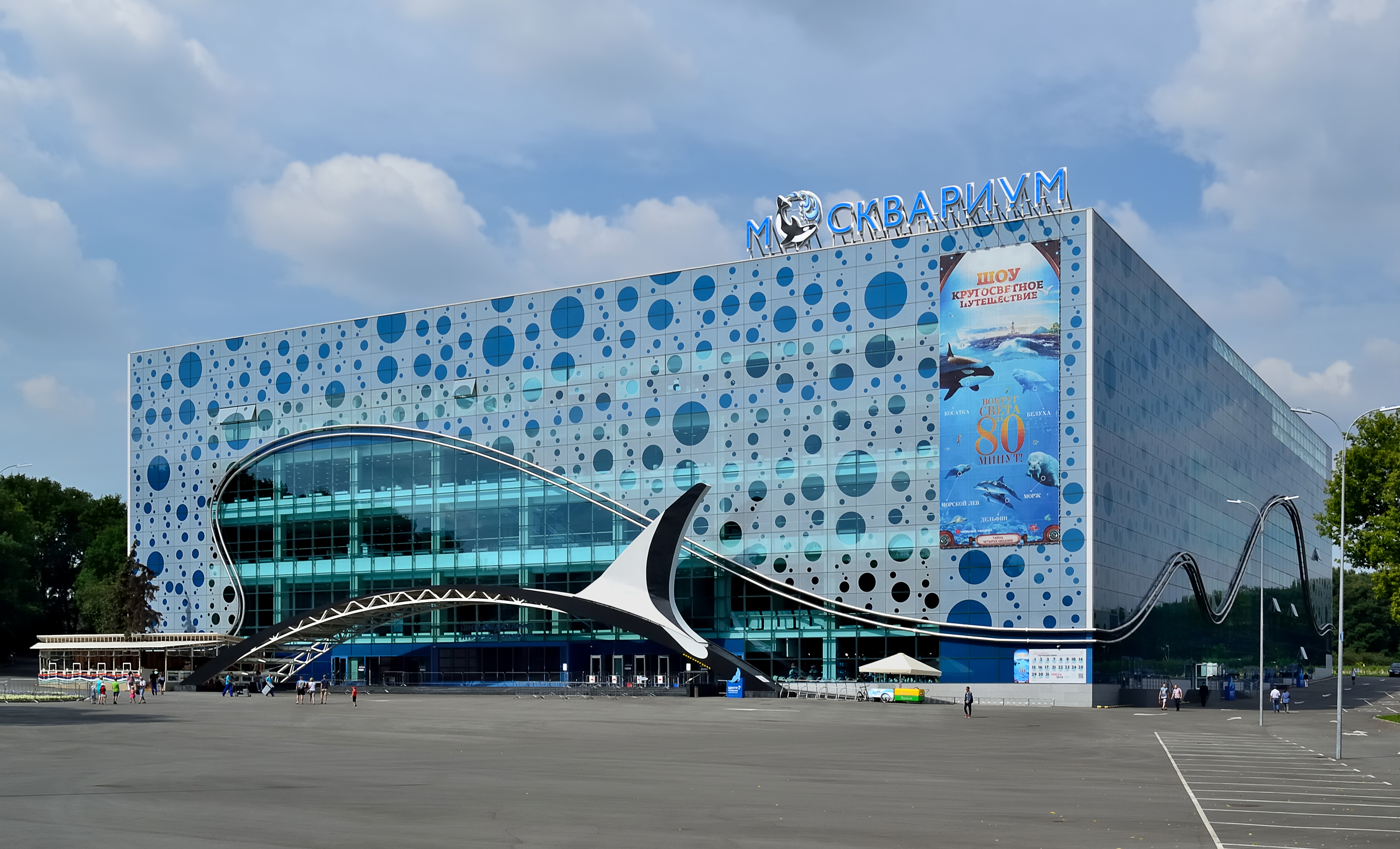
Moscow. VDNKh. The main building of the Centre of Oceanography and Marine Biology Moskvarium.
Dmitry Ivanov. 2016. CC-BY-SA 4.0. The description of the photo →
Moscow. The building of the Council of Labour and Defense (the building of the State Duma). A view from the Manege Square.

The location of the Building of the Council of Labor and Defense:

Address: Russia, г. Москва, ул. Охотный ряд, дом 1.
Sunday, 15 January 2017

Moskvarium


The Centre of Oceanography and Marine Biology Moskvarium (Russian: Москвариум) is a public oceanarium in the VDNKh, Moscow, Russia. The construction of the oceanarium started in 2013, in 2015 the building was finished and opened its doors to visitors.
The total floor space of the Moskvarium is about 53,000 m2 (about 570,490 sq ft), the area of the aquarium zone is about 12,000 m2 (about 129,170 sq ft); currently (2016) it is the largest oceanarium of Europe.
Moscow. VDNKh. The main building of the Centre of Oceanography and Marine Biology Moskvarium.
Dmitry Ivanov. 2016. CC-BY-SA 4.0. The description of the photo →
Moscow. VDNKh. The main building of the Centre of Oceanography and Marine Biology Moskvarium. A general view.

The location of the Moskvarium:

Sunday, 4 December 2016

VDNKh. Pavilion No. 38 Fishing


This faced with aluminum and glass piece of the Soviet Brutalism was built in 1985.
Moscow. VDNKh. Pavilion No. 38 Fishing. A general view.
Dmitry Ivanov. 2015. CC-BY-SA 4.0. The description of the photo →
Moscow. VDNKh. Pavilion No. 38 Fishing. A view from the Fourth Kamensky Pond.
The location of the pavilion:

Sunday, 13 November 2016

Towers of the Moscow Kremlin. A view from the Bolshoy Moskvoretsky Bridge.


Let’s ascend the Bolshoy Moskvoretsky Bridge and have a look on the Kremlin.
The Moscow Kremlin. Towers of the south wall: the Taynitskaya Tower, the First Unnamed and the Second Unnamed towers.
Dmitry Ivanov. 2016. CC-BY-SA 4.0. The description of the photo →
On the left we see three towers of the south wall (from left to right):
  • the Taynitskaya Tower (the Secret Tower) – it was built in 1485 and became the first tower of the current Kremlin; in 1770–1771 the tower was dismantled but in 1783 it was built again;
  • the First Unnamed Tower, it was built in 1480s, dismantled in 1770s and built again in 1780s; in 1812 the tower was blown up by the French, in 1835 it was restored;
  • the Second Unnamed Tower, it was built in 1480s, dismantled in 1770s and built again in 1780s.
The building of the Grand Kremlin Palace is seen behind the towers.

Monday, 17 October 2016

The Church of Saint Basil the Great in the VDNKh


Moscow. VDNKh. The Church of Saint Basil the Great.
Dmitry Ivanov. 2015. CC-BY-SA 4.0. The description of the photo →
Moscow. VDNKh. The Church of Saint Basil the Great (Russian: храм Святителя Василия Великого). Architect: Andrey Obolensky.
The building was was under consuction in 2000—2001; in 2001 it was consecrated as a chapel by Patriarch Alexy II.
In 2011 the sanctuary was attached to the chapel and Bishop Tikhon (Shevkunov) consecrated it as a church.

The location of the Saint Basil the Great Church:

Saturday, 1 October 2016

VDNKh. Pavilion No. 8 Young Naturalists


Moscow, VDNKh. Pavilion No. 8 Young Naturalists. A general view.
Dmitry Ivanov. 2015. CC-BY-SA 3.0. The description of the photo →
Moscow. VDNKh. Pavilion No. 8 Young Naturalists. Built in 1954.
Currently (2016) the pavilion is used by the museum theater The House of Fairy Tales Once Upon a Times.

Sunday, 18 September 2016

The Bell Tower of St. John's Church at the Pine Forest in Moscow


Moscow. The bell tower of the Church of the Beheading of John the Baptist.
Dmitry Ivanov. 2015. CC-BY-SA 4.0. The description of the photo →
Moscow. The bell tower of the Church of the Beheading of John the Baptist at the Pine Forest (Russian: Храм Усекновения Главы Иоанна Предтечи под Бором). The end of the 18th century.
A view from Pyatnitskaya Street.
A notable feature of this bell tower, built in traditions of the early Classicism with some elements of the Baroque, is different stylistics of its levels. Columns of the lover level (they are not seen on this photograph) are in the Doric style, the medium level is built according to the Ionic order, the columns of the upper level are the most spectacular, they have Corinthian capitals.

The location of the bell tower of the Church of the Beheading of John the Baptist:

Tuesday, 30 August 2016

Grocery Stores of the VDNKh


Moscow, VDNKh. The Grocery Store, the former pavilion of Glavkonserv.
Dmitry Ivanov. 2016. CC-BY-SA 4.0. The description of the photo →
Moscow. VDNKh. The Grocery Store.
The buiding was constructed in 1954 as the trade pavilion of the Glavkonserv (the Main Directorate of the Packing Industry), in 1958—1959 it was used as the exhibition hall Preserved Food, in 1959 it was restructured for a grocery store.

The location of the building depicted on the photograph:

Saturday, 13 August 2016

The Sentry


Moscow. A sentry at the Tomb of the Unknown Soldier.
Dmitry Ivanov. 2014. CC-BY-SA 3.0. The description of the photo →
A private of the Kremlin Regiment at the Tomb of the Unknown Soldier in the Alexander Garden, Moscow, Russia.

The location of the post depicted on the photograph:

Saturday, 6 August 2016

Saint George attributed to Vasili Yermolin


From the collection of the Tretyakov Gallery


Moscow. The Tretyakov Gallery. Saint Geoge attributed to Vasili Yermolin.
Dmitry Ivanov. 2014. CC-BY-SA 3.0. The description of the photo →
Saint George. A fragment of the destroyed sculpture. 1464 (?). Coloured stone. The Tretyakov Gallery, Moscow, Russia.
The statue was a decoration of the Frolovskaya Strelnitsa (barbican) of the Moscow Kremlin and, later, of the Spasskaya Tower (initially the Frolovskaya Tower) built in 1491 at the site of the demolished barbican.
It was believed that the statue was sculpted by Vasily Yermolin, who was known as a merchant and contractor. Now reseachers call this attribution in question: Yermolin was the purchaser, but not the author of the sculpture. Most probably, the statue was created by masters from Italy.

Saturday, 23 July 2016

The Rostokino Aqueduct


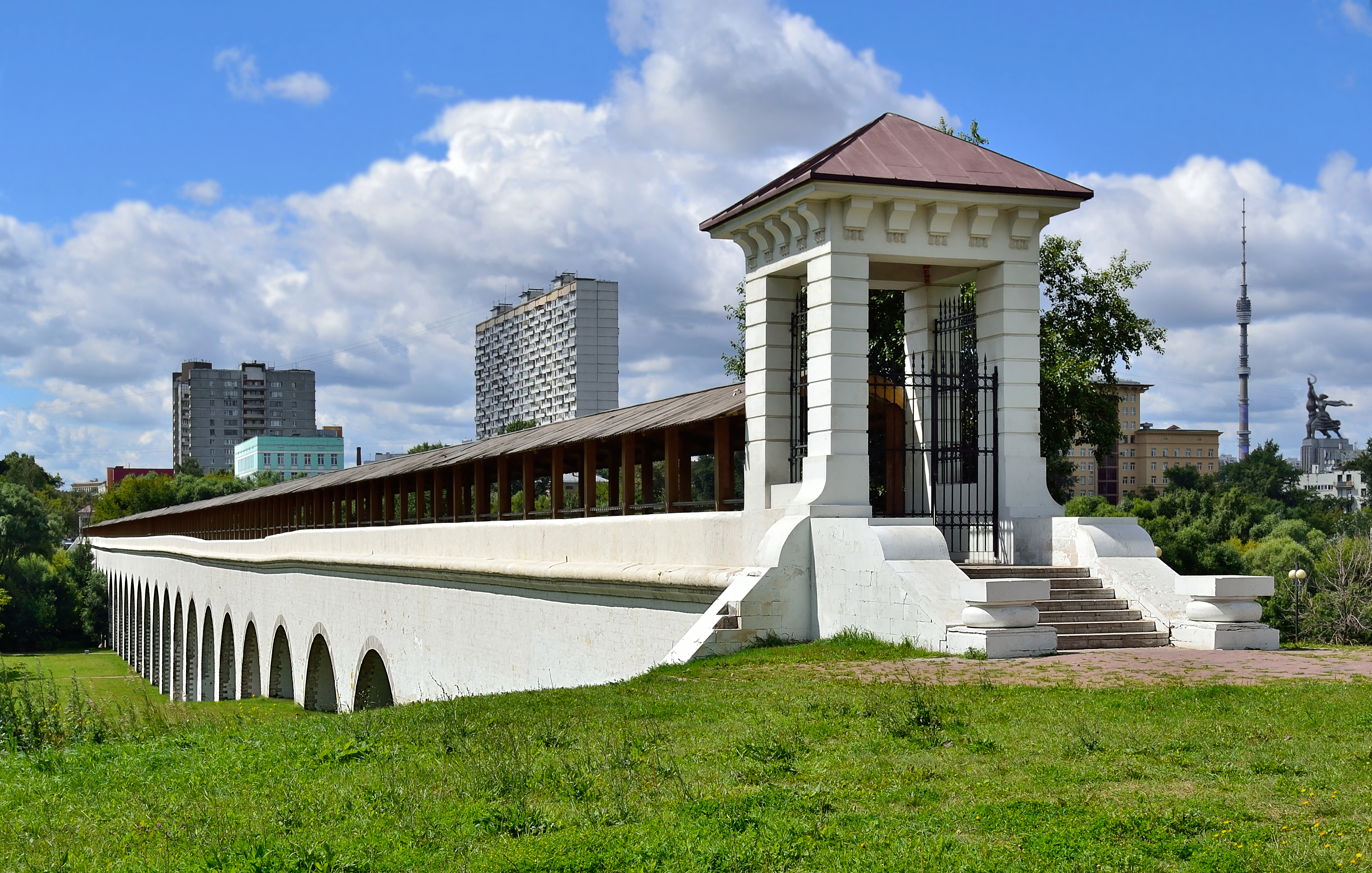
The Rostokino Aqueduct is a stone aqueduct over Yauza River situated in Moscow, Rostokino District.
The construction of the aqueduct started in 1780 and dragged for 25 years, until 1804. More than 1 million rubles were spent on building work therefore the aqueduct has the second, unofficial, name the Million Bridge.
The aqueduct was used as an engineering structure until 1990s. In 2004–2007 it was reconstructed as a pedestrian bridge.
Moscow. The Rostokino Aqueduct. The northern entrance to the aqueduct Dmitry Ivanov. 2015. CC-BY-SA 4.0. The description of the photo →
Moscow. The Rostokino Aqueduct. The northern entrance to the aqueduct.

Saturday, 16 July 2016

VDNKh. Pavilion No. 7 Seeds


We continue the series of posts devoted to the pavilions of the VDNKh in Moscow. In this issue you can see photos of Pavilion No. 7 Seeds.
Moscow. VDNKh. Pavilion No. 7 Seeds. A general view.
Dmitry Ivanov. 2016. CC-BY-SA 4.0. The description of the photo →
Moscow. VDNKh (the Exhibition of Achievements of the People's Economy). Pavilion No. 7 Seeds. Architects Z. Arzamasova, T. Petrova. 1978.
A general view.

Sunday, 10 July 2016

Lions of Moscow


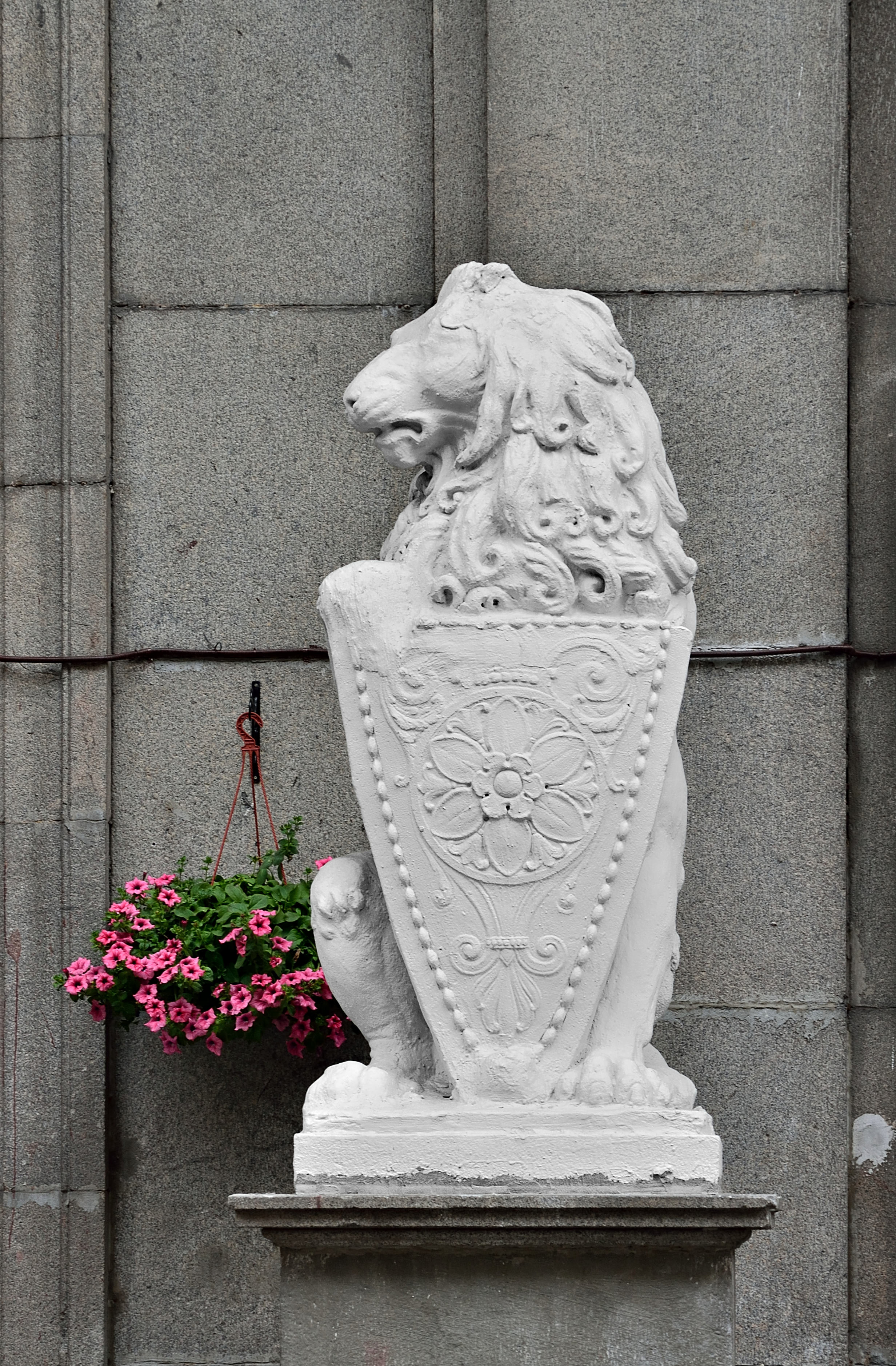
Moscow. The sculpture of a lion with a shield before a house in Myastitskaya Street.
Dmitry Ivanov. 2016. CC-BY-SA 4.0. The description of the photo →
Lion with Shield by an unknown author. 1907.
The sculpture before the house of Ivan Kuznetsov (The House With the Lion) in Myasnitskaya Street in Moscow.
Address: Russia, Mocква, Мясницкая улица, дом 15.

Monday, 4 July 2016

VDNKh. Pavilion No. 311 Sericulture


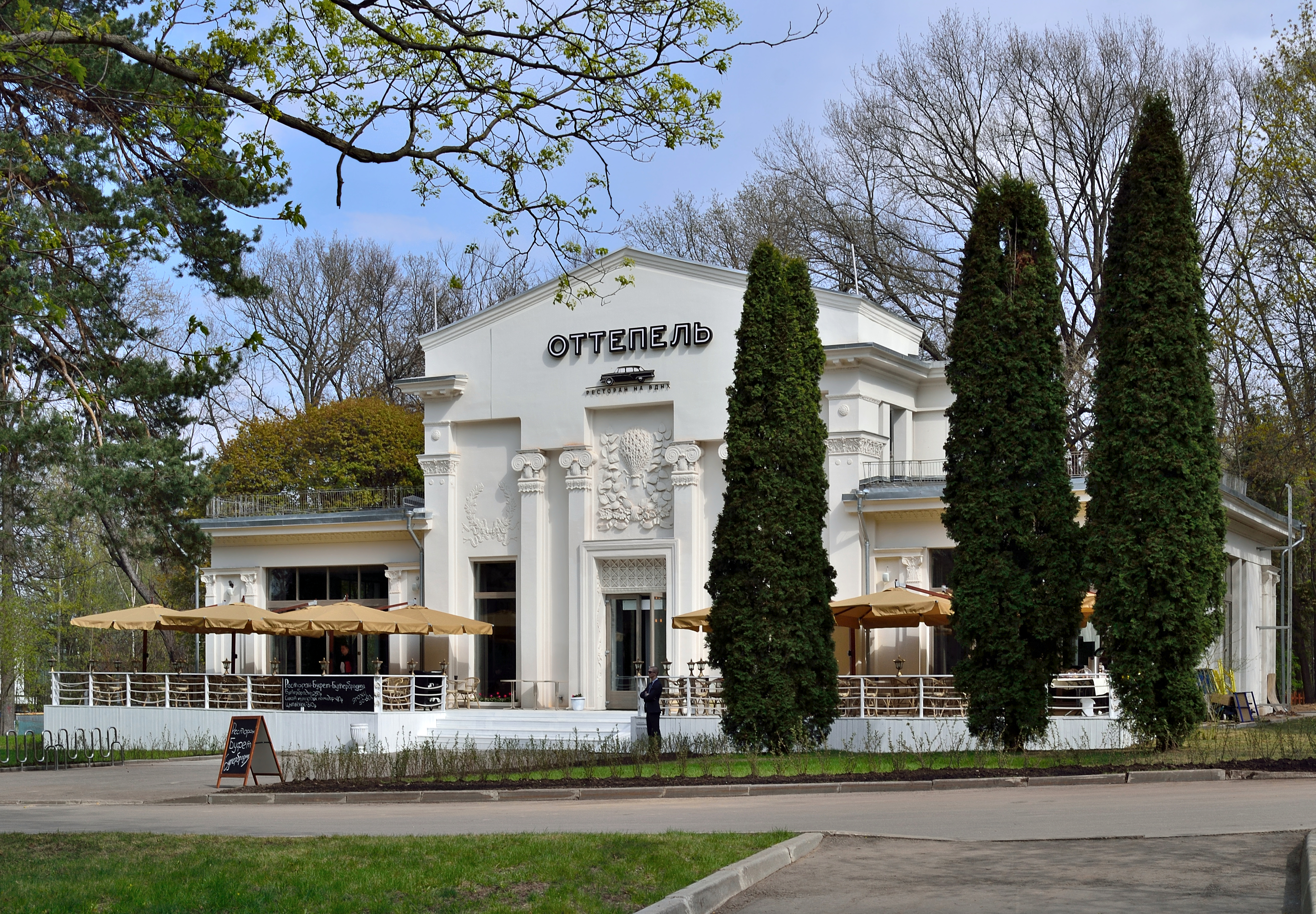
Moscow. VDNKh. Pavilion No. 311 Sericulture (since 2016 — the  restaurant Ottepel).
Dmitry Ivanov. 2016. CC-BY-SA 4.0. The description of the photo →
Moscow. VDNKh. Pavilion No. 311 Sericulture.
The pavilion was built in 1939 as the pavilion Sericulture; in 1940—1954 it was used as the "territorail" pavilion of the Moldavian Soviet Socialist Republic, then it again became one of so-called “industrial pavilions” and obtained its primary name “Sericulture”. In early 1990s the exposition devoted to the sericulture was lost; the pavilion was let on lease to enterprises of the private business. In 2015—2016 the building was reconstructed and, in the spring of 2016, the restaurant Ottepel (Thaw), designed in the style of 1960s, opened in the it.

The location of Pavilion No. 311 Sericulture:


See other other photos of pavilions in the VDNKh:
• Pavilion No. 7;
• Pavilion No. 26;
• Pavilion No. 35;
• Pavilion No. 36;
• Pavilion No. 59.

Sunday, 26 June 2016

A Sunny Day in the Kremlin


The Moscow Kremlin. A fragment of the southern facade of the Dormition Cathedral.
Dmitry Ivanov. 2014. CC-BY-SA 3.0. The description of the photo →
The Moscow Kremlin.
The door of the southern facade of the Dormition Cathedral.

The location of the Dormition Cathedral:

Sunday, 19 June 2016

Old Factory Buildings in Moscow


Moscow. Former production buildings of the Krasny Oktyabr confectionery.
Dmitry Ivanov. 2014. CC-BY-SA 4.0. The description of the photo →
Moscow. The complex of former production buildings of the Red October Confectionery on Bersenevskaya Embankment. A view from the Moskva River.
The complex of the confectionery was built in 1889–1914. The Red October used the buildings till 2007 when the production was transferred to another site. Сurrently (2016) the buildings belong to the Guta Group and are leased as offices, studios, exhibition galleries and so on.

Address: Russia, Mocква, Берсеневская набережная.

Saturday, 11 June 2016

VDNKh. Pavilion No. 59 Cereals


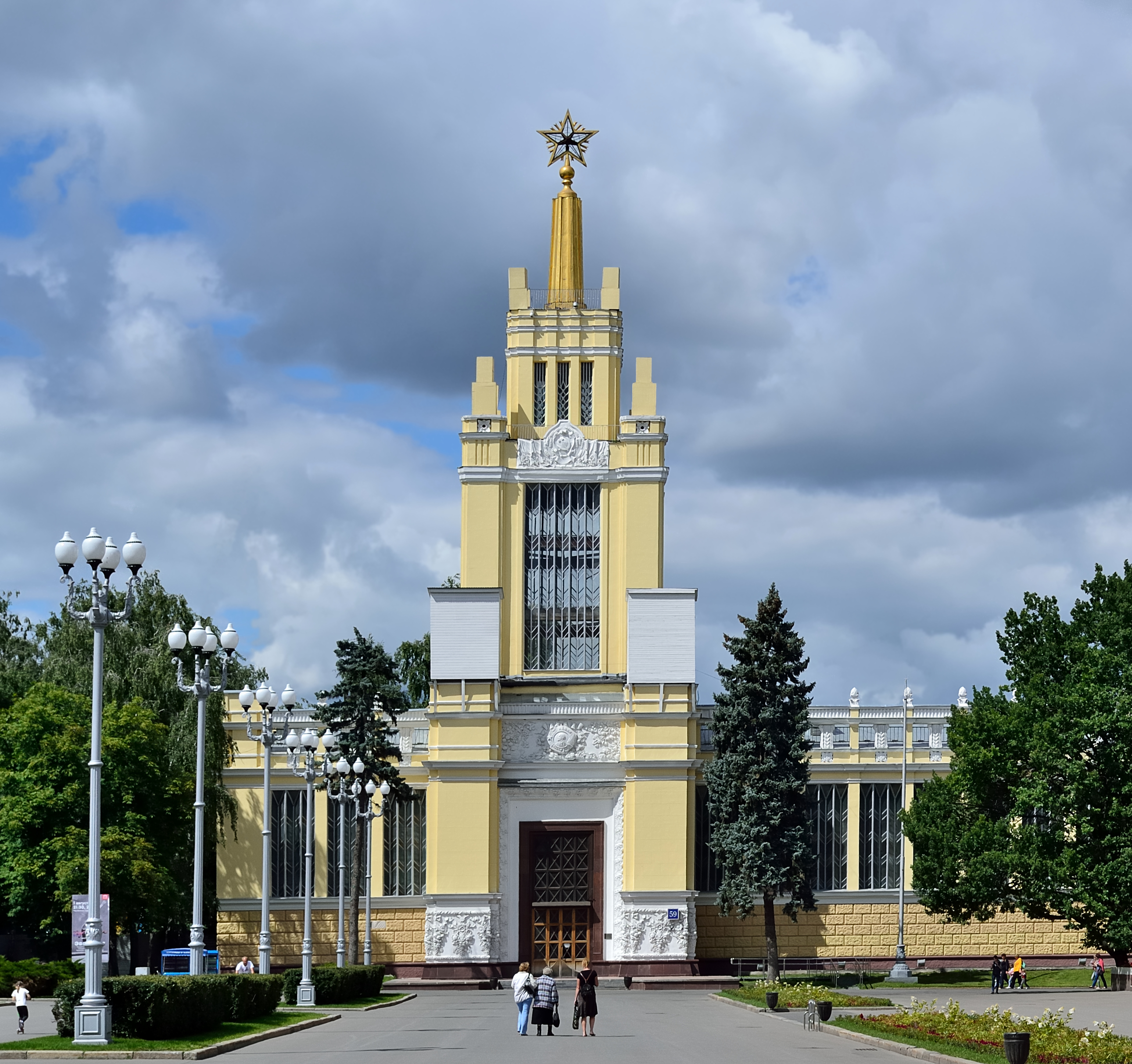
Moscow. VDNKh. Pavilion No. 59 Cereals (general view).
Dmitry Ivanov. 2015. CC-BY-SA 4.0. The description of the photo →
Moscow. VDNKh. Pavilion No. 59 Cereals.
The pavilion was built in 1939 by the architect Dmitry Chechulin. In 1954 it was reconstructed by the same architect and assumed its the current external appearance.
The pavilion was more than once renamed, its original name was Moscow, Tula, and Ryazan Oblasts.

Saturday, 30 April 2016

Angel of Kuskovo


This angel crowns the Church of the Merciful Saviour (built in 1737—1739), the domestic church at Kuskovo, the estate of the Sheremetev family. The current sculpture, mounted on the top of the church cupola, is an aluminum replica of the original figure casted and installed in 1983.

Moscow. Kuskovo. The figure of an angel on the top of the Church of the Merciful Saviour. Mavra Petrova, Dmitry Ivanov. 2014. CC-BY-SA 3.0. The description of the photo →
The figure of an angel with the cross mounted on the top of the Church of the Merciful Saviour. Late 1730s, the replica of 1983.

Saturday, 16 April 2016

VDNKh. Pavilion No 26 Transport of the USSR


Moscow. VDNKh. Pavilion No. 26 Transport (general view).
Dmitry Ivanov. 2015. CC-BY-SA 4.0. The description of the photo →
Moscow. VDNKh. Pavilion No. 26 Transport of the USSR.
The pavilion was built in 1937, in 1954 it was reconstructed and assumed its the current external appearance.
The pavilion was more than once renamed: in 1937—1938 it was the pavilion Cereals, in 1938—1954 — Cotton, in 1954—1955 — Agriculture, in 1956—1957 — Geology, Petroleum, Chemistry, in 1958—1966 — Chemical Industry.