Showing posts with label Stalinist architecture. Show all posts

Sunday, 22 January 2017

The Building of the Council of Labour and Defense (the Building of the State Duma)


The Building of the Council of Labour and Defense (STO) in Moscow was designed by Arkady Langman (1886—1968) and built in 1935.
After the dissolution of the STO in 1937 the building was used by the Council of People's Commissars (Sovnarkom) and then by its successor — the Council of Ministers of the Soviet Union (Sovmin); later the building was transferred to the State Planning Committee (Gosplan).
Currently (2017) the State Duma of the Russian Federation is located in the building.
The façade of this piece of the early Stalinist architecture combines the logicality of the Constructivism with the monumentality of the Neoclassicism which soon became the main style of the Soviet architecture of the Stalinist period. The design created by Arkady Langman was highly appreciated and for a long time it was considered as the model of governmental buildings.
Moscow. VDNKh. The main building of the Centre of Oceanography and Marine Biology Moskvarium.
Dmitry Ivanov. 2016. CC-BY-SA 4.0. The description of the photo →
Moscow. The building of the Council of Labour and Defense (the building of the State Duma). A view from the Manege Square.

The location of the Building of the Council of Labor and Defense:

Address: Russia, г. Москва, ул. Охотный ряд, дом 1.

Saturday, 1 October 2016

VDNKh. Pavilion No. 8 Young Naturalists


Moscow, VDNKh. Pavilion No. 8 Young Naturalists. A general view.
Dmitry Ivanov. 2015. CC-BY-SA 3.0. The description of the photo →
Moscow. VDNKh. Pavilion No. 8 Young Naturalists. Built in 1954.
Currently (2016) the pavilion is used by the museum theater The House of Fairy Tales Once Upon a Times.

Tuesday, 30 August 2016

Grocery Stores of the VDNKh


Moscow, VDNKh. The Grocery Store, the former pavilion of Glavkonserv.
Dmitry Ivanov. 2016. CC-BY-SA 4.0. The description of the photo →
Moscow. VDNKh. The Grocery Store.
The buiding was constructed in 1954 as the trade pavilion of the Glavkonserv (the Main Directorate of the Packing Industry), in 1958—1959 it was used as the exhibition hall Preserved Food, in 1959 it was restructured for a grocery store.

The location of the building depicted on the photograph:

Monday, 4 July 2016

VDNKh. Pavilion No. 311 Sericulture


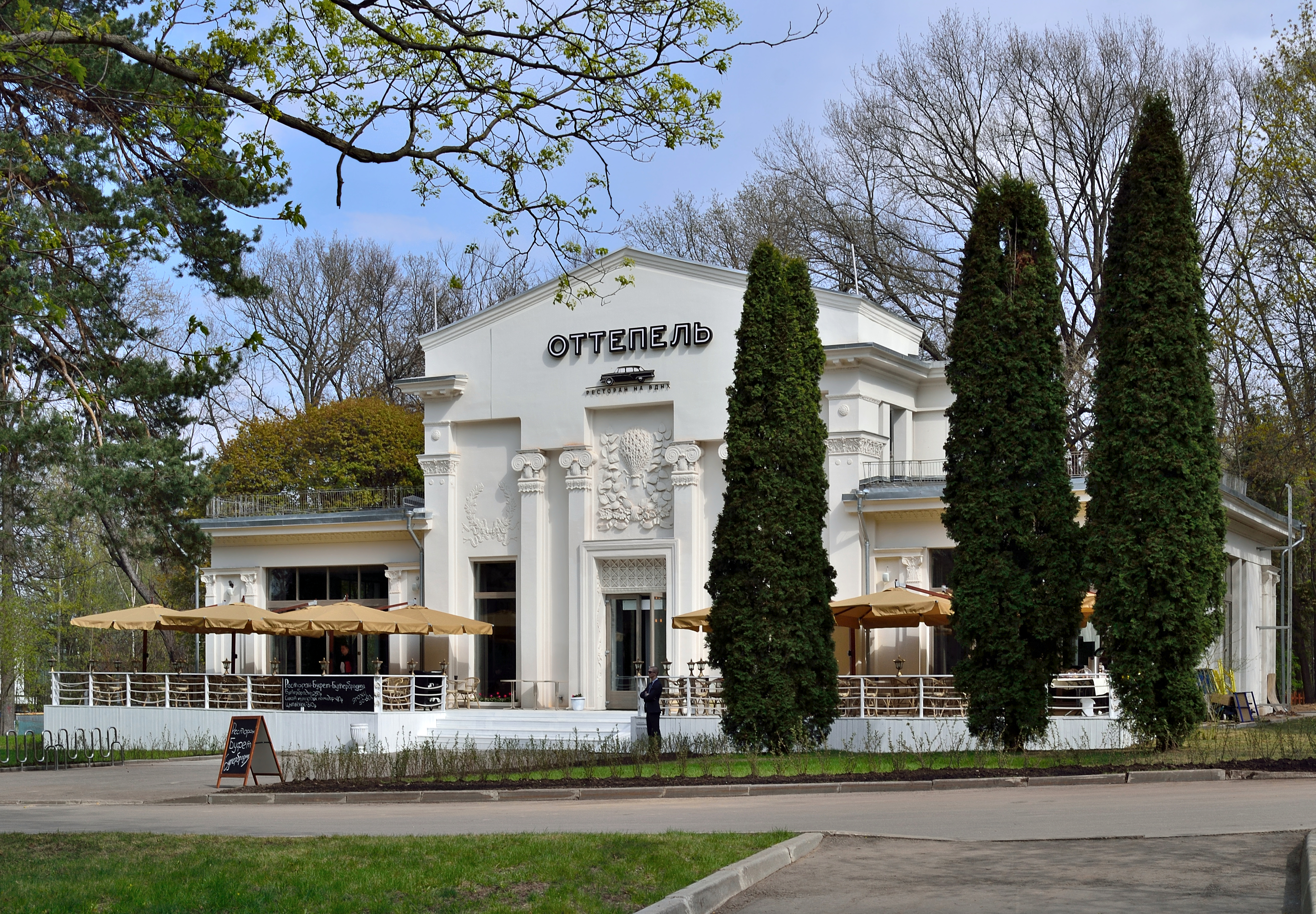
Moscow. VDNKh. Pavilion No. 311 Sericulture (since 2016 — the  restaurant Ottepel).
Dmitry Ivanov. 2016. CC-BY-SA 4.0. The description of the photo →
Moscow. VDNKh. Pavilion No. 311 Sericulture.
The pavilion was built in 1939 as the pavilion Sericulture; in 1940—1954 it was used as the "territorail" pavilion of the Moldavian Soviet Socialist Republic, then it again became one of so-called “industrial pavilions” and obtained its primary name “Sericulture”. In early 1990s the exposition devoted to the sericulture was lost; the pavilion was let on lease to enterprises of the private business. In 2015—2016 the building was reconstructed and, in the spring of 2016, the restaurant Ottepel (Thaw), designed in the style of 1960s, opened in the it.

The location of Pavilion No. 311 Sericulture:


See other other photos of pavilions in the VDNKh:
• Pavilion No. 7;
• Pavilion No. 26;
• Pavilion No. 35;
• Pavilion No. 36;
• Pavilion No. 59.

Saturday, 11 June 2016

VDNKh. Pavilion No. 59 Cereals


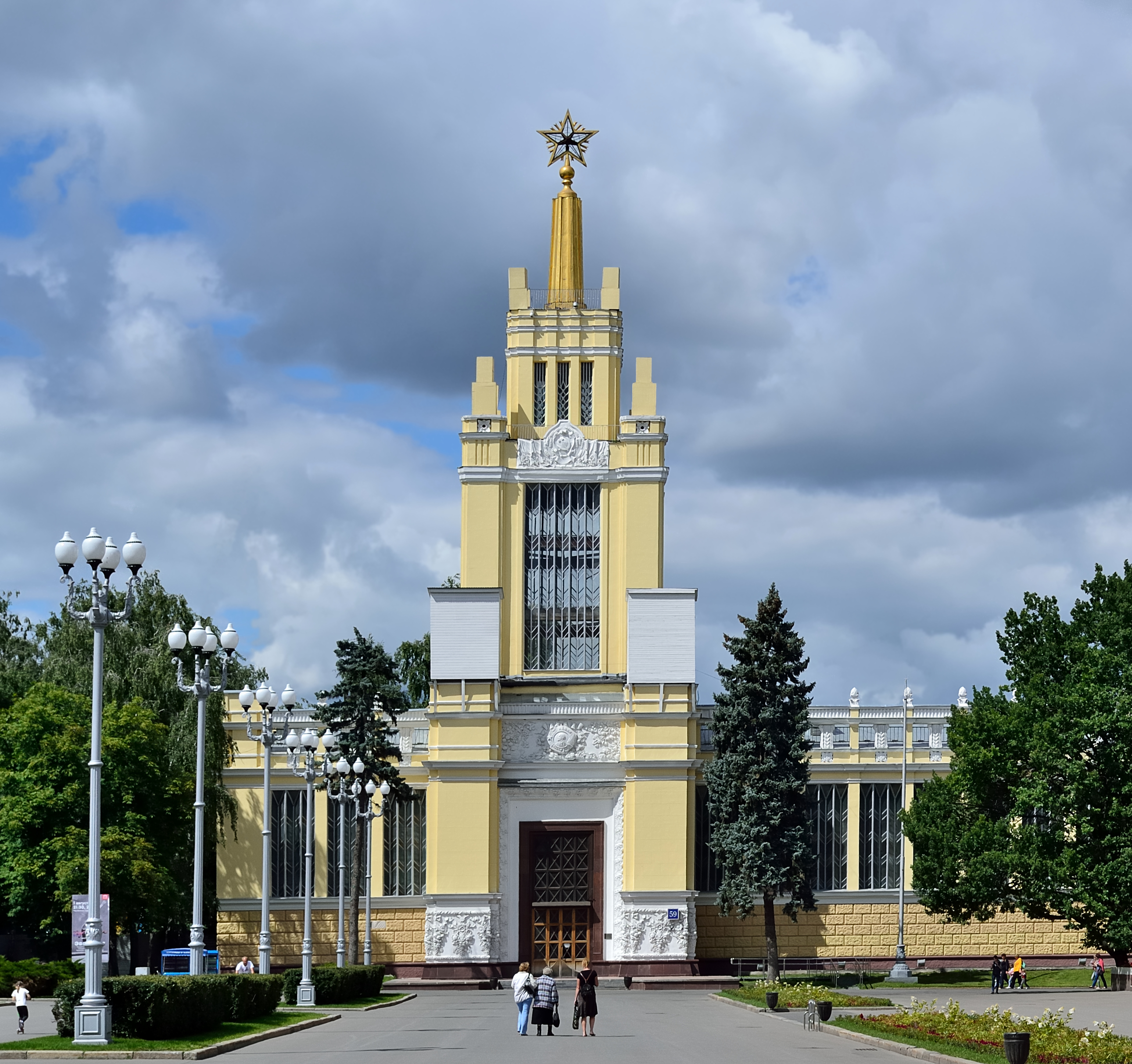
Moscow. VDNKh. Pavilion No. 59 Cereals (general view).
Dmitry Ivanov. 2015. CC-BY-SA 4.0. The description of the photo →
Moscow. VDNKh. Pavilion No. 59 Cereals.
The pavilion was built in 1939 by the architect Dmitry Chechulin. In 1954 it was reconstructed by the same architect and assumed its the current external appearance.
The pavilion was more than once renamed, its original name was Moscow, Tula, and Ryazan Oblasts.

Saturday, 16 April 2016

VDNKh. Pavilion No 26 Transport of the USSR


Moscow. VDNKh. Pavilion No. 26 Transport (general view).
Dmitry Ivanov. 2015. CC-BY-SA 4.0. The description of the photo →
Moscow. VDNKh. Pavilion No. 26 Transport of the USSR.
The pavilion was built in 1937, in 1954 it was reconstructed and assumed its the current external appearance.
The pavilion was more than once renamed: in 1937—1938 it was the pavilion Cereals, in 1938—1954 — Cotton, in 1954—1955 — Agriculture, in 1956—1957 — Geology, Petroleum, Chemistry, in 1958—1966 — Chemical Industry.

Wednesday, 23 March 2016

Painted Snuffbox in the VDNKh


Moscow. VDNKh. Pavilion No. 35 Tobacco.
Dmitry Ivanov. 2015. CC-BY-SA 4.0. The description of the photo →
Moscow. VDNKh. Pavilion No. 35 Tobacco. General view. 1954. Architect V. N. Kondratiev.
Until the early 1990s the pavilion was used as a model tobacco shop. Now (2016) the building is in private ownership and used as a café.
Address: Russia, Москва, Проспект Мира, д. 119, стр. 35.

Saturday, 12 March 2016

VDNKh. Pavilion No. 36 Produce Processing Industry


This post is the first of a prospected series of reports devoted to the VDNKh — the Exhibition of Achievements of National Economy in Moscow, Russia.

Moscow. VDNKh (the Exhibition of Achievements of the People's Economy). Pavilion No. 36 Produce Processing Industry.
Dmitry Ivanov. 2015. CC-BY-SA 4.0. The description of the photo →
Moscow. VDNKh (the Exhibition of Achievements of the People's Economy). Pavilion No. 36 Produce Processing Industry.
Architects Piotr Revyakin and Yuri Sheverdyaev. 1954, reconstructed in 1974—1975 by Yu. Sheverdyaev.
Address: Russia, Москва, Проспект Мира, д. 119, д. 36.