Saturday, 23 July 2016

The Rostokino Aqueduct


The Rostokino Aqueduct is a stone aqueduct over Yauza River situated in Moscow, Rostokino District.
The construction of the aqueduct started in 1780 and dragged for 25 years, until 1804. More than 1 million rubles were spent on building work therefore the aqueduct has the second, unofficial, name the Million Bridge.
The aqueduct was used as an engineering structure until 1990s. In 2004–2007 it was reconstructed as a pedestrian bridge.
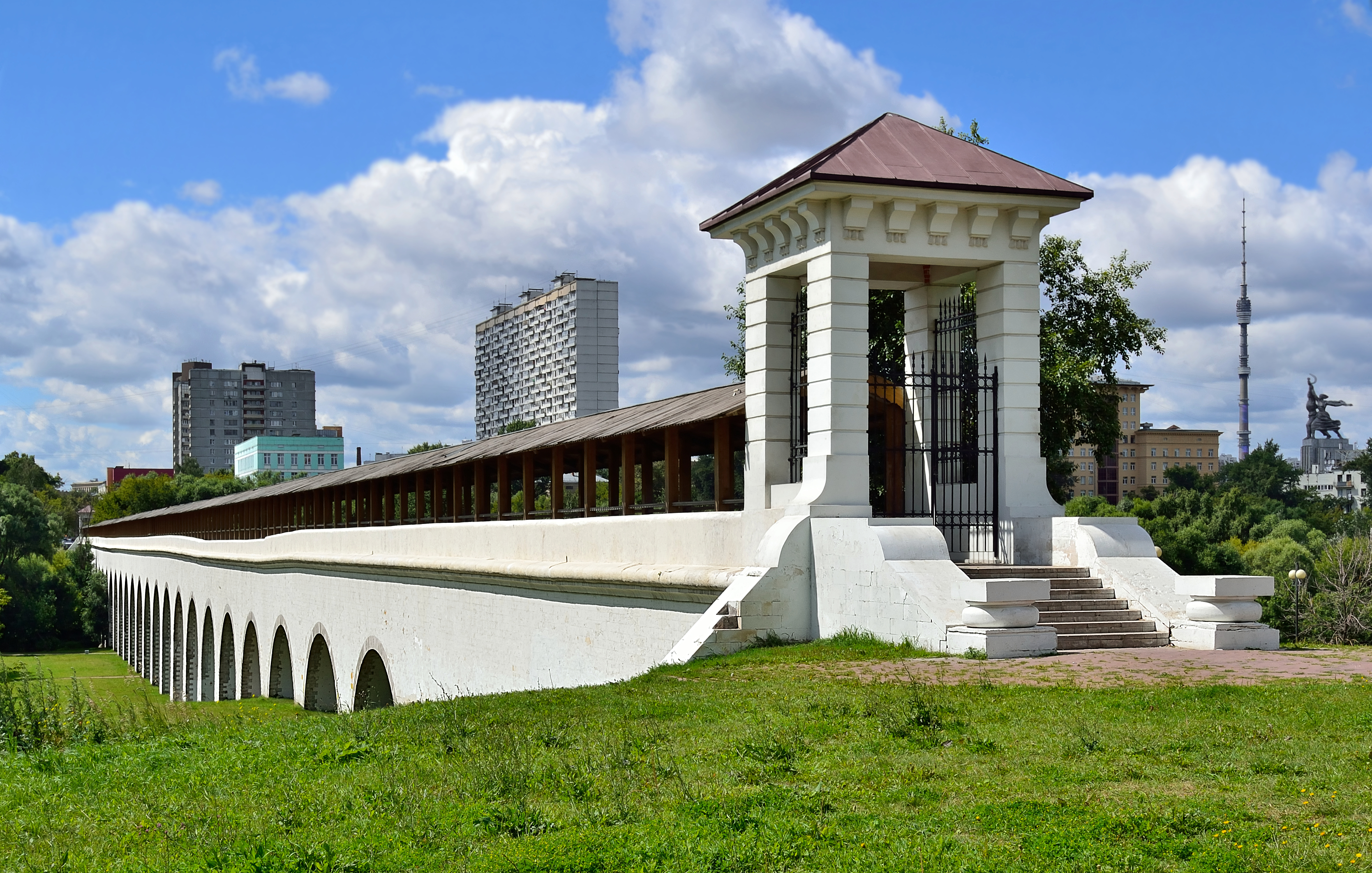
Moscow. The Rostokino Aqueduct. The northern entrance to the aqueduct Dmitry Ivanov. 2015. CC-BY-SA 4.0. The description of the photo →
Moscow. The Rostokino Aqueduct. The northern entrance to the aqueduct.

Saturday, 16 July 2016

VDNKh. Pavilion No. 7 Seeds


We continue the series of posts devoted to the pavilions of the VDNKh in Moscow. In this issue you can see photos of Pavilion No. 7 Seeds.
Moscow. VDNKh. Pavilion No. 7 Seeds. A general view.
Dmitry Ivanov. 2016. CC-BY-SA 4.0. The description of the photo →
Moscow. VDNKh (the Exhibition of Achievements of the People's Economy). Pavilion No. 7 Seeds. Architects Z. Arzamasova, T. Petrova. 1978.
A general view.

Sunday, 10 July 2016

Lions of Moscow


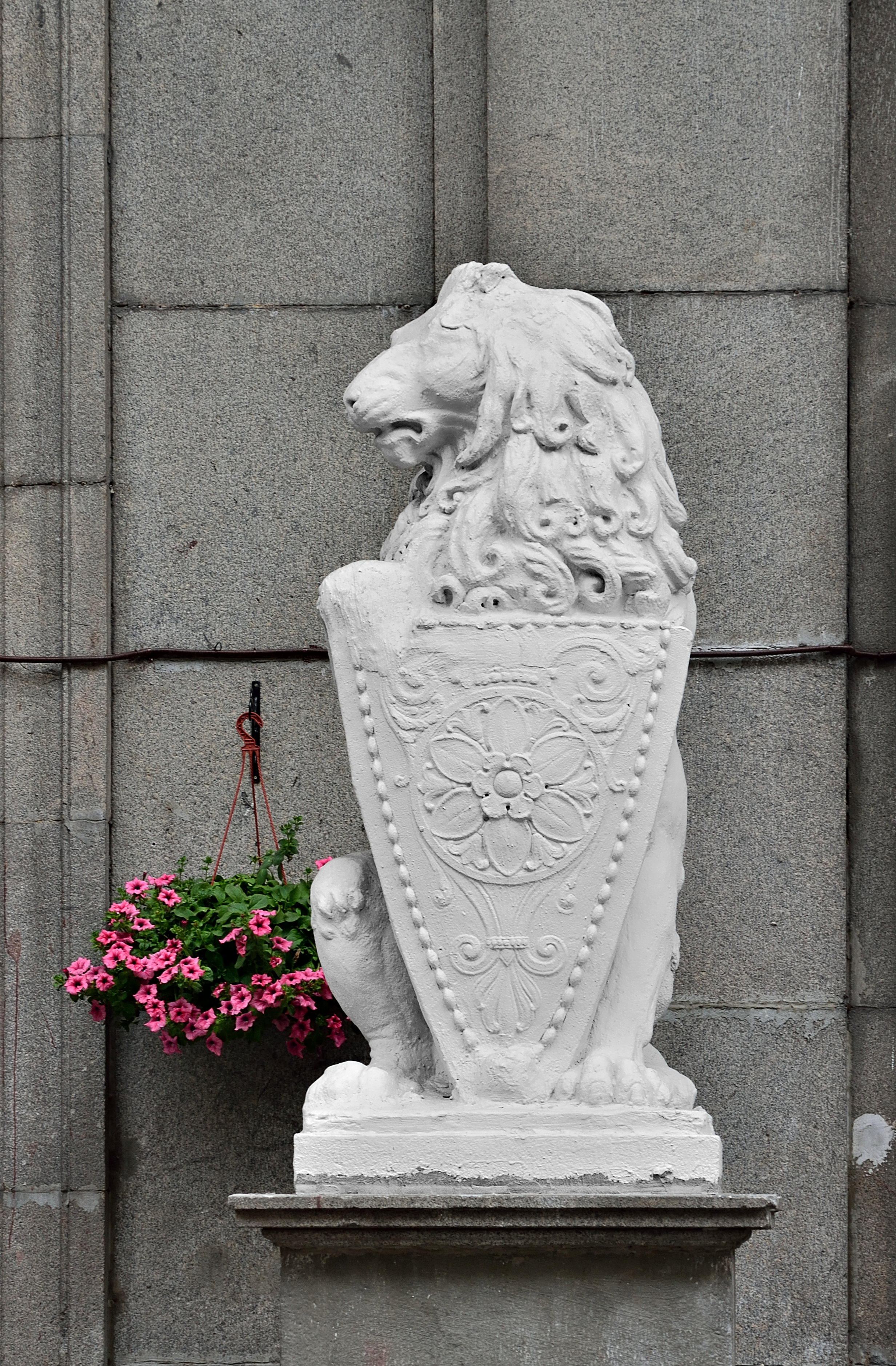
Moscow. The sculpture of a lion with a shield before a house in Myastitskaya Street.
Dmitry Ivanov. 2016. CC-BY-SA 4.0. The description of the photo →
Lion with Shield by an unknown author. 1907.
The sculpture before the house of Ivan Kuznetsov (The House With the Lion) in Myasnitskaya Street in Moscow.
Address: Russia, Mocква, Мясницкая улица, дом 15.

Monday, 4 July 2016

VDNKh. Pavilion No. 311 Sericulture


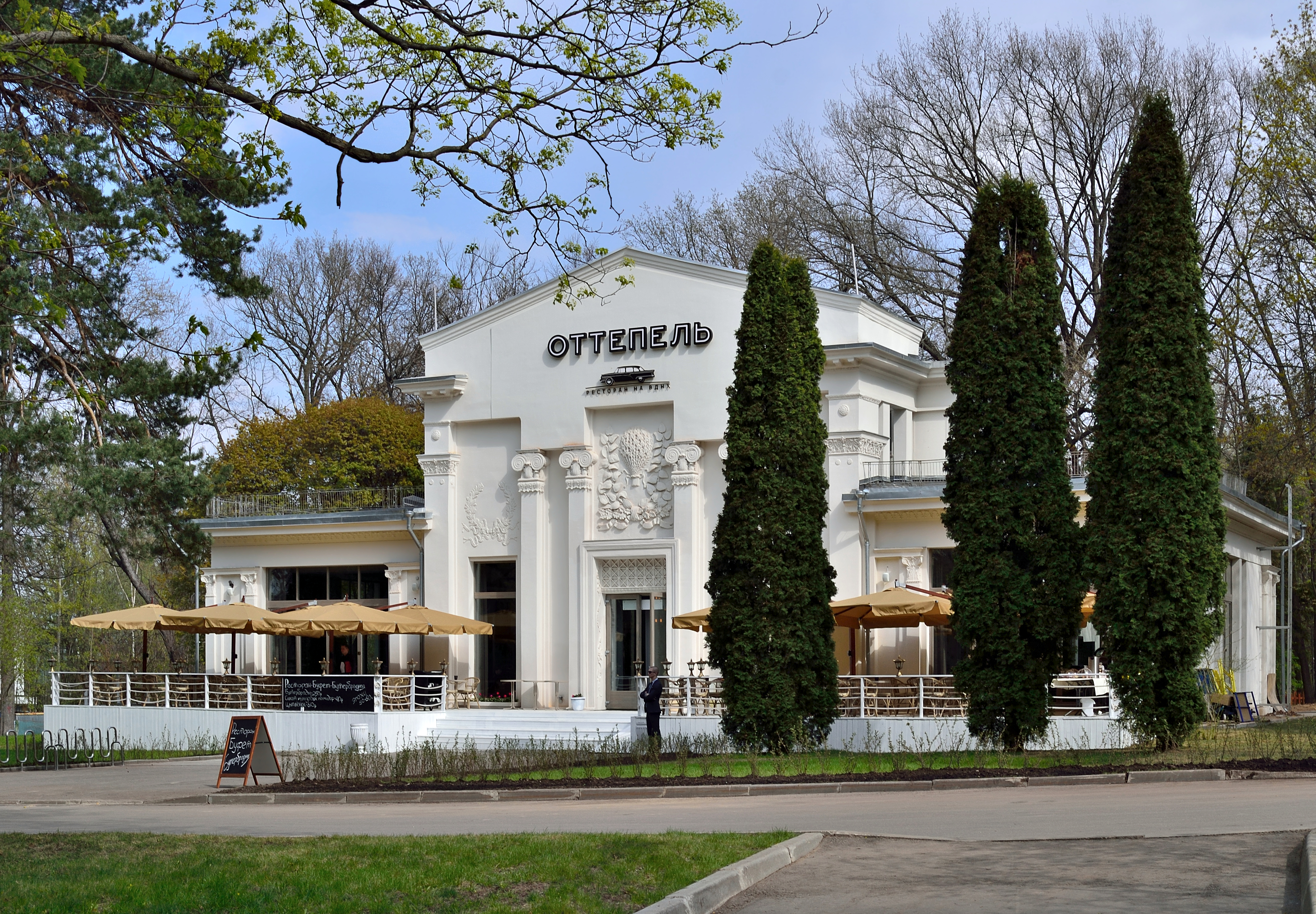
Moscow. VDNKh. Pavilion No. 311 Sericulture (since 2016 — the  restaurant Ottepel).
Dmitry Ivanov. 2016. CC-BY-SA 4.0. The description of the photo →
Moscow. VDNKh. Pavilion No. 311 Sericulture.
The pavilion was built in 1939 as the pavilion Sericulture; in 1940—1954 it was used as the "territorail" pavilion of the Moldavian Soviet Socialist Republic, then it again became one of so-called “industrial pavilions” and obtained its primary name “Sericulture”. In early 1990s the exposition devoted to the sericulture was lost; the pavilion was let on lease to enterprises of the private business. In 2015—2016 the building was reconstructed and, in the spring of 2016, the restaurant Ottepel (Thaw), designed in the style of 1960s, opened in the it.

The location of Pavilion No. 311 Sericulture:


See other other photos of pavilions in the VDNKh:
Pavilion No. 7;
Pavilion No. 26;
Pavilion No. 35;
Pavilion No. 36;
Pavilion No. 59.

Sunday, 26 June 2016

A Sunny Day in the Kremlin


The Moscow Kremlin. A fragment of the southern facade of the Dormition Cathedral.
Dmitry Ivanov. 2014. CC-BY-SA 3.0. The description of the photo →
The Moscow Kremlin.
The door of the southern facade of the Dormition Cathedral.

The location of the Dormition Cathedral:

Sunday, 19 June 2016

Old Factory Buildings in Moscow


Moscow. Former production buildings of the Krasny Oktyabr confectionery.
Dmitry Ivanov. 2014. CC-BY-SA 4.0. The description of the photo →
Moscow. The complex of former production buildings of the Red October Confectionery on Bersenevskaya Embankment. A view from the Moskva River.
The complex of the confectionery was built in 1889–1914. The Red October used the buildings till 2007 when the production was transferred to another site. Сurrently (2016) the buildings belong to the Guta Group and are leased as offices, studios, exhibition galleries and so on.

Address: Russia, Mocква, Берсеневская набережная.

Saturday, 11 June 2016

VDNKh. Pavilion No. 59 Cereals


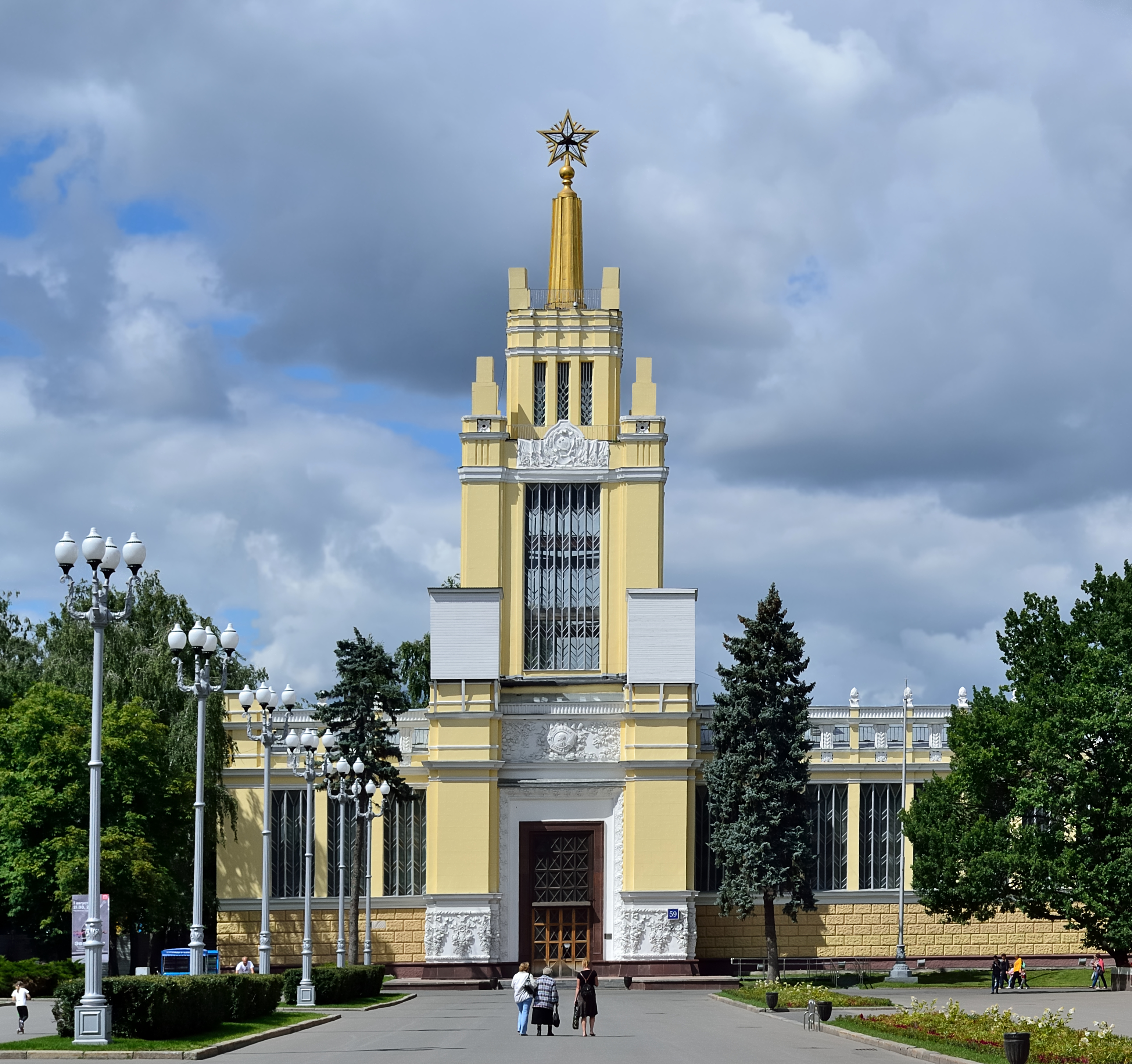
Moscow. VDNKh. Pavilion No. 59 Cereals (general view).
Dmitry Ivanov. 2015. CC-BY-SA 4.0. The description of the photo →
Moscow. VDNKh. Pavilion No. 59 Cereals.
The pavilion was built in 1939 by the architect Dmitry Chechulin. In 1954 it was reconstructed by the same architect and assumed its the current external appearance.
The pavilion was more than once renamed, its original name was Moscow, Tula, and Ryazan Oblasts.

Saturday, 28 May 2016

From the series A Dull Morning in Saint Petersburg


In this post you will find a couple of photographs made in Saint Peterburg in September 2014.

Saint Petersburg. The Peter and Paul Fortress. A decorative bomb on the Neva Gate.
Dmitry Ivanov. 2014. CC-BY-SA 4.0. The description of the photo →
Saint Petersburg. The Peter and Paul Fortress.
A decorative “bomb” on the pediment of the Neva Gate. A view from the Neva Curtain. The Trinity Bridge is seen in the background.

Saturday, 14 May 2016

Military Equipment in Memorial of Glory in Korolyov


The Memorial of Glory is a war memorial complex in Korolyov, Moscow Oblast, Russia, dedicated to military personnel and toilers of the home front of the Great Patriotic war1, as well to soldiers of other armed conflicts involving the Soviet Union and Russia. The memorial was opened on 9 May 1985.
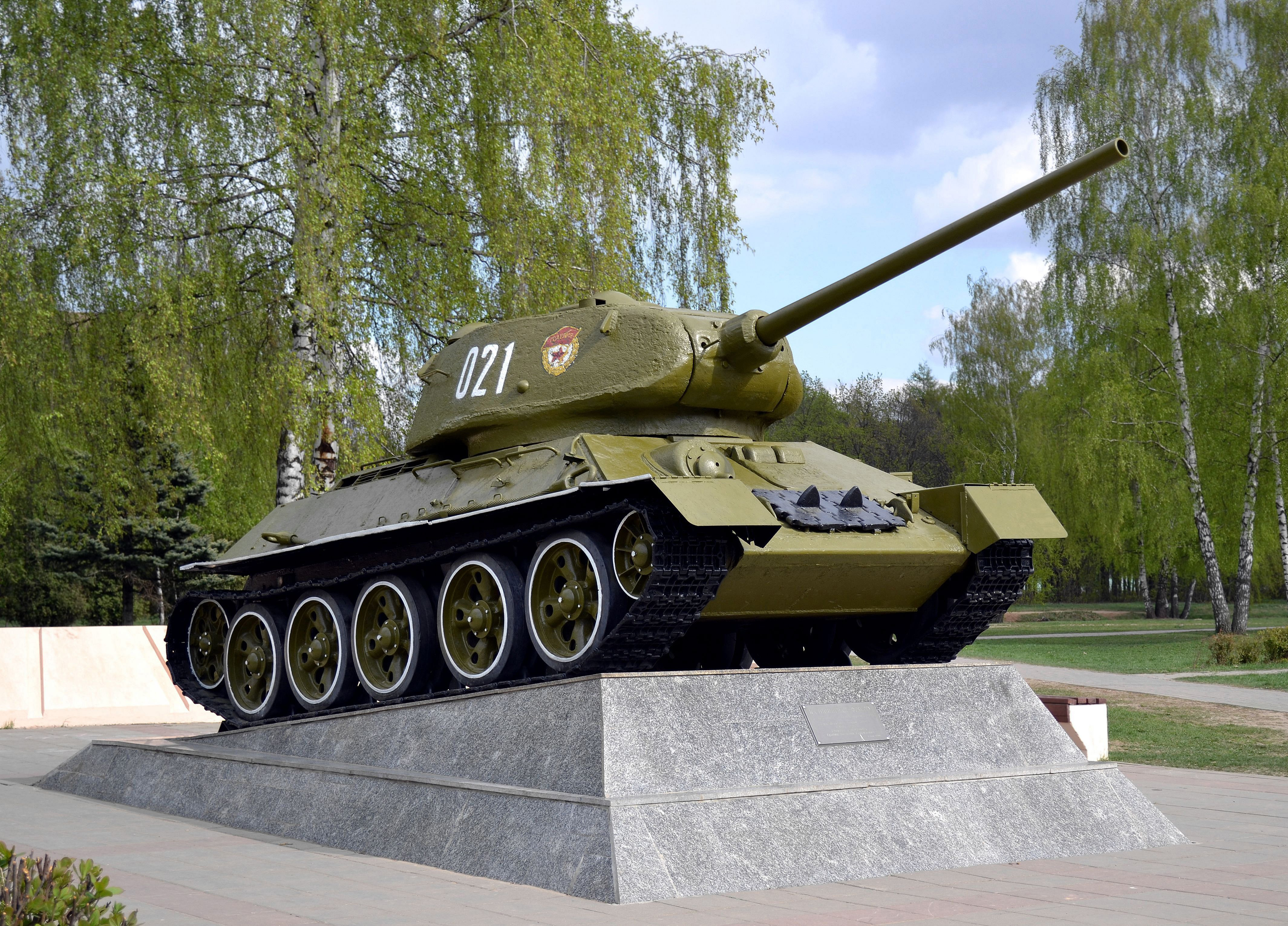
The central part of the Memorial of Glory is the Monument to Soldiers of the Great Patriotic War. Also three examples of the Soviet military equipment are installed in the memorial as monuments: a T-34-85 tank, a BS-3 gun and a BRMD-2 armoured car.

Korolyov, Moscow Oblast. A T-34-85 tank in the Memorial of Glory. Dmitry Ivanov. 2014. CC-BY-SA 3.0. The description of the photo →
A Soviet medium tank T-34-85 Model 1944 installed as the monument to the home front toilers. The monument was unveiled on 9 May 2000.
The T-34-85 tank was equipped with the 85-mm ZIS-S-53 gun designed in 1943 by Central Artillery Design Bureau (the chief designer – Vasily Grabin) located in Kaliningrad2.